
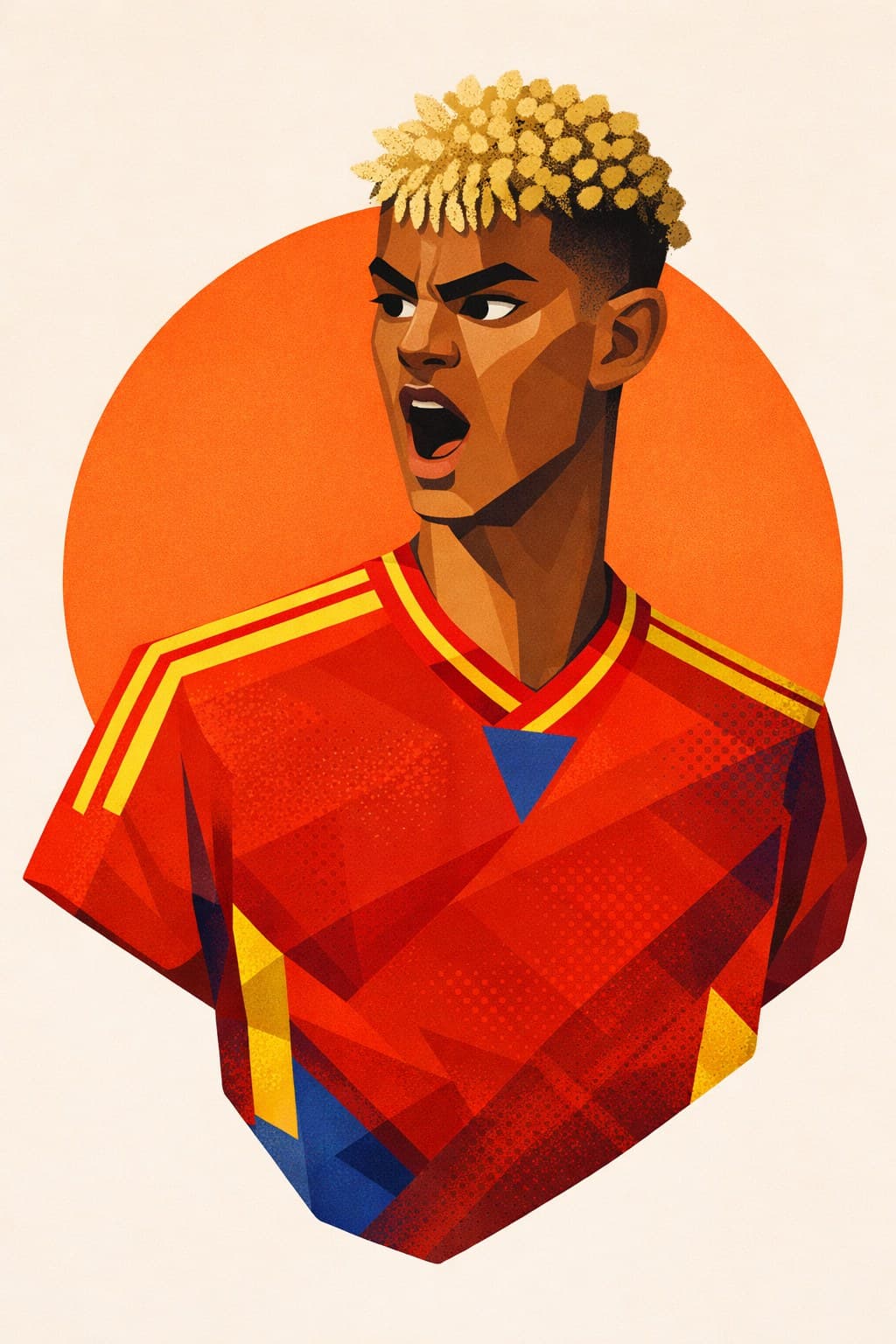
Ya tenemos el primer duelo que definirá al primer finalista del Mundial 2026.
España y Francia se enfrentarán por un lugar en la gran final, en un partido que reúne a dos de las selecciones que mejor fútbol han mostrado durante el torneo, aunque por caminos muy distintos.
Francia llegó a esta Copa del Mundo con la etiqueta de favorita y, hasta ahora, no ha hecho más que justificarla. Ha dominado la posesión cuando el partido lo exige, ha golpeado con una contundencia pocas veces vista y, sobre todo, ha manejado los tiempos de cada encuentro con una autoridad que ningún rival ha conseguido romper. Su maquinaria ofensiva sigue funcionando a la perfección y todavía nadie ha encontrado la forma de detenerla.
Al frente de ese equipo aparecen dos nombres que marcan diferencias sobre el resto. Ousmane Dembélé, vigente Balón de Oro, se ha convertido en el futbolista que acelera cada ataque francés, mientras que Kylian Mbappé continúa escribiendo otra página de su leyenda. Con ocho goles, comparte el liderato por el Botín de Oro con Lionel Messi y está a las puertas de convertirse en el máximo goleador de este Mundial.
Desde el punto de vista táctico, esta semifinal promete ser uno de los enfrentamientos más interesantes de todo el torneo.
Francia ha construido su éxito a partir de una presión asfixiante en campo rival. El objetivo es recuperar el balón lo más cerca posible de la portería contraria para defender muy arriba y convertir cada pérdida del rival en una oportunidad de gol. Esa agresividad, combinada con la enorme capacidad de definición de sus atacantes, ha sido un arma que prácticamente ningún equipo ha logrado neutralizar. Los pocos que consiguieron incomodarlos fueron aquellos que renunciaron a disputar la posesión, se replegaron muy atrás y obligaron a Francia a mover el balón sin encontrar espacios.
España representa exactamente el reto contrario.
Desde hace años, la selección española ha consolidado una identidad basada en la posesión. Su prioridad es controlar el partido a través del balón, moverlo con paciencia y precisión hasta encontrar el espacio adecuado, porque entiende que la mejor forma de defender es no prestarle la pelota al rival.
Curiosamente, tampoco hemos visto demasiado a Francia defendiendo durante este torneo. Cuando le ha tocado hacerlo ha respondido con solvencia, pero casi siempre ha sido el equipo que impone las condiciones del encuentro. España, por su parte, tampoco acostumbra protegerse cerca de su área, sino hacerlo desde el control territorial y la circulación del balón.
Uno de los dos tendrá que salir de su zona de confort.
Mi impresión es que Francia estará dispuesta a ceder la posesión. Si España adelanta sus líneas y logra instalarse en campo rival, inevitablemente aparecerán espacios a la espalda de su defensa, exactamente el escenario que más favorece al conjunto francés. Con Ousmane Dembélé atacando por un costado y Kylian Mbappé lanzado al espacio en cada transición, esos metros libres pueden convertirse en la diferencia del partido.
La paradoja es evidente: durante buena parte del torneo Francia ha encontrado pocos equipos dispuestos a atacarla de verdad. España podría ser el primero en hacerlo con convicción y eso podría darle precisamente el tipo de partido que más le conviene al conjunto francés.
Por eso, la llave del encuentro puede estar en un solo futbolista: Rodri Hernández. Dependiendo de qué tanto pueda comandar la media cancha y controlar el ritmo del partido, España podrá minimizar los espacios que tanto busca Francia para castigar a sus rivales.
Del otro lado aparece una España que volvió a sufrir para mantenerse con vida en el torneo. Ante Bélgica necesitó, una vez más, un gol sobre la hora de Mikel Merino, quien se ha convertido en el gran talismán de Luis de la Fuente. Entrando desde el banquillo, ya son dos partidos consecutivos en los que aparece para marcar el gol de la victoria.
La otra gran historia de España sigue siendo Lamine Yamal. El joven extremo llegó al Mundial rodeado de enormes expectativas y durante buena parte del torneo pareció quedarse corto respecto a ellas, condicionado también por los problemas físicos que arrastró desde el primer partido. Sin embargo, conforme han avanzado las rondas, también lo ha hecho su nivel. Se le ve cada vez más cómodo, más explosivo y con esa sensación permanente de que puede cambiar un partido con una sola jugada.
Eso quedó muy claro frente a Bélgica.
Para frenarlo, los belgas recurrieron constantemente a coberturas escalonadas, dobles marcas e incluso ayudas de un tercer futbolista. Cada vez que Lamine recibía abierto por la banda, obligaba a reorganizar toda la estructura defensiva rival.
Ese detalle puede convertirse en uno de los factores decisivos frente a Francia.
Hasta ahora, el conjunto francés prácticamente no ha tenido que defender durante largos periodos. Cuando Bélgica consiguió aislar a Lamine, incluso obligó a Jeremy Doku a retroceder para colaborar en tareas defensivas. La consecuencia inmediata fue que Bélgica tuvo que recorrer muchos más metros cada vez que recuperaba el balón, reduciendo buena parte del peligro que Doku suele generar cuando recibe cerca del último tercio.
Aun así, Lamine nunca dejó de intentarlo. Encaró una y otra vez a su marcador, fue mucho más peligroso durante la primera mitad y perdió influencia en el segundo tiempo, tanto por el desgaste físico como por los ajustes defensivos belgas. Pero incluso cuando no supera a su rival, genera otro tipo de ventajas: atrae múltiples marcas y libera espacios para que otros futbolistas encuentren caminos hacia el área.
Ahí es donde nombres como Dani Olmo y Pedri pueden adquirir un protagonismo enorme. Ninguno ha mostrado todavía su mejor versión en este Mundial, pero ambos tienen la capacidad de aprovechar esos espacios que Lamine genera alrededor suyo. También será importante saber si Mikel Oyarzabal recupera el gol. El delantero acumula dos partidos consecutivos sin marcar y esa falta de contundencia resume perfectamente el gran contraste entre ambos semifinalistas.
España domina los partidos desde la posesión. Francia los decide desde la contundencia.
Por eso muchos consideran esta semifinal como una final adelantada. Será un enfrentamiento entre dos maneras completamente distintas de entender el fútbol: el control contra la transición, la paciencia contra el vértigo.
Al final, esta semifinal también será una prueba de aprendizaje.
¿Qué tanto aprendió Francia de los errores que cometió Portugal? Los lusos apostaron por presionar hombre a hombre y dejaron espacios a la espalda de su última línea, justo el escenario que España aprovechó una y otra vez con las llegadas de sus interiores.
Y del otro lado, ¿qué tanto aprendió España? Porque una cosa es controlar el balón y otra muy distinta contener a un equipo con la capacidad de definición que tiene el ataque francés. Basta un espacio, una transición o un desajuste para cambiar el destino de un partido.
Así que la gran pregunta queda sobre la mesa.
¿Se impondrá el control posicional de España o la devastadora capacidad de Francia para atacar los espacios?
Las semifinales no siempre las gana el equipo que mejor juega. Muchas veces las decide el que mejor aprende de los errores ajenos.
Y tú, ¿cómo imaginas este duelo táctico que nos espera en la primera semifinal del Mundial 2026?
Espantapájaros
Trascendió que un aficionado noruego se negó a remar en las tribunas junto con el resto de sus compatriotas, argumentando que la práctica es históricamente incorrecta. Tal vez nunca le llegó el memo de que el fútbol rara vez busca reproducir la historia con precisión.
Lo que ocurre en esas gradas va mucho más allá de una recreación vikinga. Es un ritual compartido, una identidad que conecta a miles de personas entre sí y con los once que están en la cancha. Al final, nadie recordará si los vikingos remaban exactamente así. Lo que sí recordarán es la imagen de todo un estadio empujando a su selección con un solo movimiento.
Y, en el fútbol, las emociones suelen dejar mucha más huella que la precisión histórica.
The first semifinal of the 2026 FIFA World Cup is officially set.
Spain and France will battle for the first ticket to the final in what many already consider the match of the tournament. It is difficult to imagine a more compelling tactical showdown than the one these two teams are about to deliver.
France entered the World Cup as the overwhelming favorite, and through every round they have justified that status. They have controlled possession whenever the game has required it, punished opponents with ruthless efficiency and, perhaps most impressively, dictated the rhythm of every match. No team has managed to disrupt the balance of a side that looks increasingly comfortable imposing its own terms.
At the heart of that dominance are two players who have separated themselves from the rest of the tournament. Ballon d'Or winner Ousmane Dembélé has become the engine behind France's attacking play, while Kylian Mbappé continues to add chapters to an already legendary international career. With eight goals, he shares the lead in the Golden Boot race with Lionel Messi and sits on the verge of becoming the tournament's all-time leading scorer.
From a tactical perspective, this semifinal promises to be one of the most fascinating contests of the entire World Cup.
France's success has been built around an aggressive high press. Their objective is simple: recover possession as close to the opponent's goal as possible, defend high up the pitch and turn every turnover into an immediate scoring opportunity. Combined with the clinical finishing of their attacking players, that pressure has become a weapon almost no opponent has been able to neutralize. The few teams that managed to frustrate France did so by dropping deep, surrendering possession and denying them the space they thrive on.
Spain represent the complete opposite challenge.
For years, La Roja have embraced an identity built around possession. Their objective is to control matches through the ball, patiently circulating it until the right opening appears. For Spain, the best way to defend has always been to keep the ball away from their opponents.
Ironically, France have rarely been forced to defend for extended periods during this tournament. Whenever they have, they have looked comfortable enough, but more often than not they have been the side dictating the terms of the match. Spain, meanwhile, do not defend by retreating into their own box. They defend by controlling territory and possession.
One of these teams will have to step outside its comfort zone.
My expectation is that France will happily concede possession. If Spain establish themselves high up the field, spaces will inevitably appear behind their defensive line—the exact scenario France would like to exploit. With Ousmane Dembélé attacking from wide areas and Kylian Mbappé constantly threatening the space in behind, those open channels could become the defining feature of the match.
The irony is impossible to ignore. Throughout most of this World Cup, France have faced opponents unwilling to attack them with conviction. Spain may become the first team prepared to do exactly that, potentially giving France the type of game they have been waiting for.
For that reason, the key to the semifinal may rest in the feet of a single player: Rodri. If the former Ballon d'Or winner can dictate the tempo in midfield and control where the game is played, Spain will stand a much better chance of denying France the transitional moments they have used so effectively throughout the tournament.
On the other side stands a Spanish team that once again had to suffer to stay alive in the tournament. Against Belgium, they needed yet another late winner from Mikel Merino, who has quietly become Luis de la Fuente's ultimate talisman. Coming off the bench, he has now scored the winning goal in consecutive matches.
Spain's other major storyline remains Lamine Yamal.
The teenage winger arrived at the World Cup carrying enormous expectations, and for much of the tournament he struggled to fully live up to them, partly because of the physical issues that limited him in the opening match. But with every knockout round his influence has grown. He looks sharper, more explosive and increasingly capable of producing the kind of moment that changes an entire match.
Belgium experienced that firsthand.
Stopping Lamine required constant defensive adjustments. Double teams became routine. At times, Belgium even committed a third defender to contain him. Every time he received the ball out wide, the entire defensive structure had to shift in his direction.
That detail could become one of the defining tactical battles against France.
Until now, France have rarely been forced into prolonged defensive work. Spain even forced Jérémy Doku to track back and contribute defensively. The immediate consequence was that Belgium had to cover far greater distances every time they recovered possession, significantly reducing the threat Doku usually provides when receiving the ball high up the pitch.
Even then, Lamine never stopped attacking his defender. He was far more influential during the first half before gradually fading after the break, partly because of fatigue and partly because Belgium's defensive adjustments became more effective. Yet even when he fails to beat his marker, he creates advantages of a different kind. He attracts multiple defenders, opening spaces elsewhere for teammates to exploit.
That is where players like Dani Olmo and Pedri could become decisive. Neither has produced his best football of the tournament so far, but both possess the intelligence to capitalize on the gaps Lamine creates around him.
The same applies to Mikel Oyarzabal. After two consecutive blanks, Spain are beginning to experience the one thing France have rarely lacked throughout this World Cup: ruthless finishing.
Spain control matches through possession. France win them through efficiency.
That is why so many people see this semifinal as the real final. It is a collision between two completely different footballing philosophies: control versus transition, patience versus explosiveness.
Ultimately, this match may become a test of who has learned the most.
How much did France learn from Portugal's mistakes? Portugal committed to aggressive man-to-man pressing and repeatedly exposed the space behind their back line—the exact area Spain exploited with the late runs of their midfielders.
And what about Spain?
How much have they learned about containing a team capable of finishing chances as ruthlessly as France? Against a side with this much attacking quality, a single transition, a single misplaced pass or a single defensive lapse can decide an entire semifinal.
That leaves us with the question that will define this match.
Will Spain's positional control prevail, or will France's devastating transition game once again prove unstoppable?
Semifinals are not always won by the team that plays the better football. More often than not, they are won by the team that learns the most from everyone else's mistakes.
So, what do you think?
How do you see this tactical battle unfolding?
Final Whistle
Reports emerged that a Norwegian supporter refused to join his fellow fans in the now-famous rowing celebration, arguing that it was historically inaccurate.
Perhaps nobody told him that football has never been about historical accuracy.
What happens in those stands goes far beyond a faithful Viking reenactment. It is a shared ritual, an identity that connects thousands of supporters with the eleven players on the pitch. Years from now, nobody will remember whether Vikings actually rowed that way.
They will remember an entire stadium moving as one.
And in football, emotion almost always leaves a deeper mark than historical precision.