
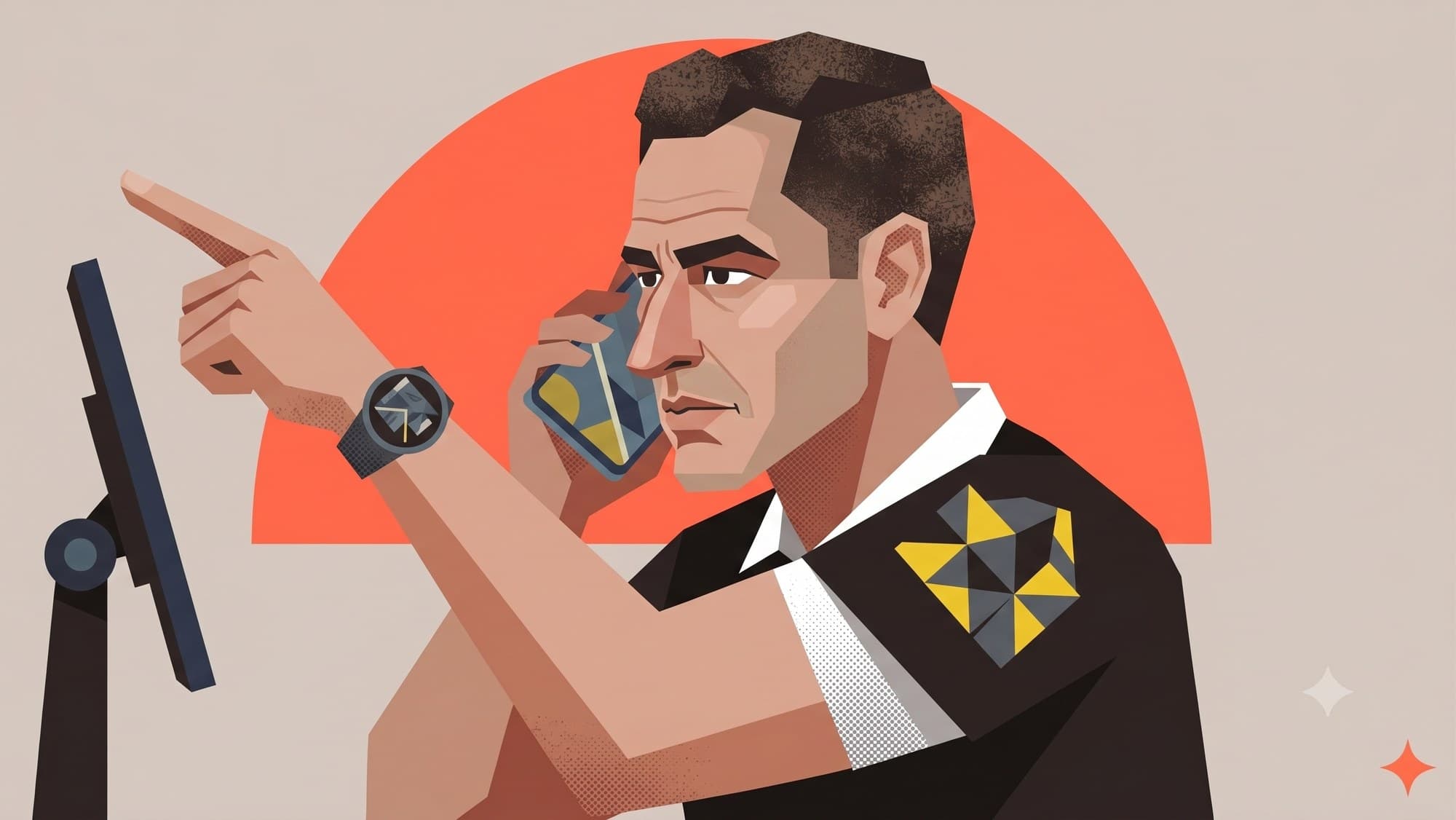
"Es el Mundial más sucio y corrupto de la historia."
Eso es lo que se lee todos los días en redes sociales. Lo escuchamos en la radio, lo vemos en la televisión y aparece una y otra vez en videos donde se congela una imagen para demostrar que la FIFA está manipulando el torneo. Nunca habíamos tenido tantas herramientas para revisar una jugada y, al mismo tiempo, nunca había existido tanta desconfianza hacia quienes las revisan. Y entonces surge una pregunta que va más allá de Argentina, de Messi o del VAR, y que me parece mucho más interesante.
¿Cómo llegamos hasta aquí?
Porque los errores arbitrales no nacieron en este Mundial. Han acompañado al fútbol desde siempre y, nos guste o no, también forman parte de su historia. Ahí están la mano de Maradona contra Inglaterra, el gol fantasma inglés, el "No era penal" contra México o el gol que nunca le concedieron a Inglaterra en Sudáfrica 2010. Cada generación tiene su propia colección de injusticias y, sin embargo, nunca habíamos visto una reacción colectiva como la de este torneo. Entonces, si los errores siempre estuvieron ahí, ¿qué cambió para que millones de aficionados sintieran que el fútbol dejó de jugarse bajo las mismas reglas para todos?
El problema ya no es el error arbitral. El problema es que millones de aficionados dejaron de creer que el torneo se juega bajo las mismas condiciones para todos.
Todos queremos echarle la culpa al VAR. Es lo más fácil. Después de todo, llegó con la promesa de corregir los errores humanos y devolverle justicia al juego. Durante décadas aceptamos que un árbitro simplemente podía equivocarse. No veía la jugada, estaba mal colocado o tomaba una decisión en una fracción de segundo. Hoy existen decenas de cámaras, líneas virtuales, sensores, una sala de revisión y varios árbitros observando exactamente la misma acción. La tecnología elevó el estándar de prueba. Lo irónico es que no consiguió elevar la confianza. Ahora ya no nos preguntamos por qué el árbitro no vio una jugada; nos preguntamos cómo nadie, entre tantas personas y tanta tecnología, fue capaz de verla.
La tecnología elevó el estándar de prueba. Lo irónico es que no consiguió elevar la confianza.
Pero también hay algo de responsabilidad en nosotros. Creemos que el reglamento funciona como una fórmula matemática cuando, en realidad, sigue dependiendo de la interpretación humana. ¿Qué es fuerza excesiva? ¿Dónde termina una entrada temeraria y dónde empieza el juego brusco grave? Dos árbitros FIFA pueden analizar exactamente la misma acción y llegar a conclusiones distintas sin que ninguno esté actuando de mala fe. A eso habría que añadir otra realidad que pocas veces discutimos: ya no vemos el fútbol completo. Vemos el cuadro congelado, la cámara lenta, el círculo amarillo, la flecha roja y un video de quince segundos acompañado por alguien que asegura que la jugada era una expulsión clarísima. Terminamos juzgando una fotografía. Y el fútbol no ocurre en fotografías. Ocurre en movimiento.
El fútbol no ocurre en fotografías. Ocurre en movimiento.
Todo eso explica por qué Argentina se convirtió en el centro de la tormenta. La entrada de Lionel Messi sobre un rival abrió un debate que todavía sigue vivo. Para muchos era una expulsión; para otros, apenas una amarilla que el árbitro dejó pasar. Después llegaron los tres goles de Messi y, con ellos, la sensación de que el mejor jugador del mundo estaba siendo protegido por el sistema. Días más tarde apareció el caso de Florian Balogun. La acción era muy parecida, pero el desenlace fue completamente distinto: la tarjeta roja. Hasta ahí seguíamos hablando de fútbol. Lo que cambió la conversación fue lo que ocurrió después. El presidente de Estados Unidos anunció públicamente que había llamado a Gianni Infantino para pedir que se revisara el caso y, poco tiempo después, la FIFA suspendió la sanción para que Balogun pudiera disputar el siguiente partido. Más allá de si la expulsión había sido correcta o incorrecta, el precedente resultó demoledor. Para muchos aficionados fue la primera vez que una decisión tomada en la cancha parecía modificarse desde una oficina.
Después llegaron el fuera de juego milimétrico que eliminó a Croacia y las revisiones al límite durante el partido entre Argentina y Egipto. Cada una de esas acciones puede defenderse desde el reglamento. Algunas probablemente fueron correctas. El problema es que, juntas, alimentan una percepción muy difícil de romper: la de que existe una vara distinta para medir a cada selección.
Y las percepciones tienen una característica muy peligrosa. Una vez que se instalan, comienzan a alimentarse de sí mismas. Cuando un aficionado está convencido de que un equipo está siendo favorecido, cada nueva jugada deja de analizarse por sí misma y empieza a convertirse en una prueba más de esa teoría. Ya no importa únicamente lo que ocurrió en la cancha; importa la historia que creemos estar viendo. Eso no significa que las críticas sean infundadas ni que los árbitros sean inmunes a los sesgos. Sería ingenuo pensarlo. Un jugador con el aura de Messi puede influir, consciente o inconscientemente, en quien toma una decisión. Todos somos humanos. Eso sí necesita pruebas mucho más sólidas: afirmar que esos sesgos forman parte de una conspiración diseñada para alterar el resultado de un Mundial.
Y aquí es donde quiero hacerte una pregunta.
Si tú formas parte de quienes están convencidos de que todo esto es una conspiración, ¿quién te hizo tanto daño? ¿En qué momento el fútbol te hizo perder la fe de creer que el mejor jugador del mundo puede ganar un partido simplemente porque es el mejor jugador del mundo? ¿En qué momento dejamos de confiar incluso en el árbitro que dirige sus partidos?
No hago esa pregunta para defender a la FIFA. Mucho menos para defender a Messi. La hago porque me preocupa algo mucho más grande. El día que dejamos de conceder el beneficio de la duda, dejamos también de disfrutar el juego. Hoy parece que cada decisión polémica necesita una conspiración. Si favorece a Argentina, es porque las teorías más repetidas sostienen que la FIFA quiere despedir a Messi levantando la Copa del Mundo. Si favorece a Estados Unidos, es porque el poder político intervino. Si favorece al anfitrión, es porque los intereses comerciales pesan más que el reglamento. Poco a poco hemos sustituido el beneficio de la duda por la teoría de la conspiración.
La justicia en el deporte siempre tendrá dos componentes: debe ser justa, pero también debe parecer justa. Y ahí está el verdadero problema. El mayor dolor que puede sentir un aficionado no es perder un partido. Es perder la confianza en lo que ocurre dentro de la cancha. Porque cuando esa confianza desaparece, ya no solo se mancha el esfuerzo de los jugadores. También se mancha el de quienes cruzaron un continente para estar en un estadio, el de quienes ahorraron durante años para vivir un Mundial y el de quienes siguen creyendo que, durante noventa minutos, el fútbol todavía puede decidirse únicamente dentro del terreno de juego.
El mayor dolor que puede sentir un aficionado no es perder un partido. Es perder la confianza en lo que ocurre dentro de la cancha.
Quizá nunca sabremos si este Mundial estuvo condicionado por intereses externos. Lo que sí sabemos es que, por primera vez en mucho tiempo, millones de aficionados dejaron de concederle a la FIFA el beneficio de la duda. Y recuperar esa credibilidad puede ser mucho más difícil que levantar cualquier Copa del Mundo.
Espantapájaros
Hace unos días, uno de mis divulgadores científicos favoritos, Javier Santaolalla, publicó una reflexión criticando el culto al dato y el uso excesivo de la tecnología en el fútbol. No comparto del todo esa postura. Me parece que la información, bien utilizada, nos ayuda a entender mejor el juego. Pero también entiendo la incomodidad que provoca ver cómo un Mundial puede decidirse porque la punta de un botín estaba adelantada apenas unos milímetros.
Lo irónico es que la tecnología llegó para reducir la discusión y terminó multiplicándola. Quizá el problema no sea el VAR. Quizá tampoco sea la tecnología. Tal vez el verdadero debate sea hasta dónde queremos sacrificar el espíritu del fútbol en nombre de una precisión que, al menos por ahora, todavía no ha conseguido convencernos de que las decisiones son más justas.
"This is the dirtiest and most corrupt World Cup in history."
That is what you read every day on social media. You hear it on the radio, you see it on television, and it shows up again and again in videos where one frozen frame is used to prove that FIFA is manipulating the tournament. We have never had so many tools to review a play and, at the same time, we have never seen so much distrust toward the people reviewing them. And that raises a question that goes beyond Argentina, Messi or VAR, and that I find much more interesting.
How did we get here?
Because refereeing mistakes were not born in this World Cup. They have always been part of football and, whether we like it or not, they are also part of its history. There is Maradona's hand against England, England's ghost goal, Mexico's famous "No era penal," or the goal England were never awarded against Germany in South Africa 2010. Every generation has its own collection of injustices and, still, we had never seen a collective reaction quite like the one surrounding this tournament. So if mistakes were always there, what changed for millions of fans to feel that football is no longer being played under the same rules for everyone?
The problem is no longer the refereeing mistake. The problem is that millions of fans stopped believing the tournament is being played under the same conditions for everyone.
We all want to blame VAR. It is the easy answer. After all, it arrived with the promise of correcting human error and bringing justice back to the game. For decades, we accepted that a referee could simply get something wrong. He did not see the play, he was badly positioned, or he made a decision in a fraction of a second. Today there are dozens of cameras, virtual lines, sensors, a review room and several referees watching the exact same action. Technology raised the standard of proof. The irony is that it did not raise the level of trust. Now we no longer ask why the referee failed to see something; we ask how nobody, among so many people and so much technology, was able to see it.
Technology raised the standard of proof. The irony is that it did not raise the level of trust.
But there is also some responsibility on our side. We act as if the rulebook worked like a mathematical formula when, in reality, it still depends on human interpretation. What counts as excessive force? Where does a reckless challenge end and serious foul play begin? Two FIFA referees can look at the exact same action and reach different conclusions without either of them acting in bad faith. Add to that another reality we rarely discuss: we no longer watch the full play. We watch the frozen frame, the slow motion replay, the yellow circle, the red arrow and a fifteen-second clip accompanied by someone assuring us that the play was a clear red card. We end up judging a photograph. And football does not happen in photographs. It happens in motion.
Football does not happen in photographs. It happens in motion.
All of that explains why Argentina became the center of the storm. Lionel Messi's challenge on an opponent opened a debate that is still alive. For many, it was a red card; for others, barely a yellow the referee let go. Then came Messi's three goals and, with them, the feeling that the best player in the world was being protected by the system. A few days later came the Florian Balogun case. The action was very similar, but the outcome was completely different: the red card. Up to that point, we were still talking about football. What changed the conversation was what happened next. The president of the United States publicly announced that he had called Gianni Infantino to ask for the case to be reviewed and, shortly after, FIFA suspended the sanction so Balogun could play the next match. Whether the sending-off had been right or wrong, the precedent was devastating. For many fans, it was the first time a decision made on the pitch seemed to be modified from an office.
Then came the millimetric offside that eliminated Croatia and the tight reviews during Argentina's match against Egypt. Each of those actions can be defended through the rulebook. Some of them were probably correct. The problem is that, together, they feed a perception that is very difficult to break: that every national team is being measured with a different stick.
And perceptions have a very dangerous characteristic. Once they settle in, they begin feeding themselves. When a fan is convinced that a team is being favored, every new play stops being analyzed on its own and starts becoming one more piece of evidence for that theory. What happened on the pitch is no longer the only thing that matters; what matters is the story we think we are watching. That does not mean the criticism is baseless, or that referees are immune to bias. It would be naive to think so. A player with Messi's aura can influence, consciously or unconsciously, the person making a decision. We are all human. What does require much stronger evidence is claiming that those biases are part of a conspiracy designed to alter the result of a World Cup.
And this is where I want to ask you a question.
If you are one of those people convinced that all of this is a conspiracy, who hurt you so badly? At what point did football make you lose the faith to believe that the best player in the world can win a match simply because he is the best player in the world? At what point did we stop trusting even the referee in charge of his matches?
I am not asking that to defend FIFA. Much less to defend Messi. I am asking because something much bigger worries me. The day we stop granting the benefit of the doubt, we also stop enjoying the game. Today it feels like every controversial decision needs a conspiracy. If it favors Argentina, it is because the most repeated theories say FIFA wants Messi to lift the World Cup as a farewell. If it favors the United States, it is because political power intervened. If it favors the host, it is because commercial interests matter more than the rulebook. Little by little, we have replaced the benefit of the doubt with conspiracy theory.
Justice in sports will always have two components: it has to be fair, but it also has to look fair. And that is where the real problem lives. The deepest pain a football fan can feel is not losing a match. It is losing trust in what happens on the pitch. Because when that trust disappears, it does not only stain the effort of the players. It also stains the effort of those who crossed a continent to be in a stadium, of those who saved for years to live a World Cup, and of those who still believe that, for ninety minutes, football can still be decided only on the field.
The deepest pain a football fan can feel is not losing a match. It is losing trust in what happens on the pitch.
Maybe we will never know whether this World Cup was conditioned by outside interests. What we do know is that, for the first time in a long time, millions of fans stopped granting FIFA the benefit of the doubt. And recovering that credibility may be much harder than lifting any World Cup.
Final Whistle
A few days ago, one of my favorite science communicators, Javier Santaolalla, published a reflection criticizing the cult of data and the excessive use of technology in football. I do not fully share that view. I think information, when used well, helps us understand the game better. But I also understand the discomfort of watching a World Cup be decided because the tip of a boot was a few millimeters ahead.
The irony is that technology arrived to reduce the argument and ended up multiplying it. Maybe the problem is not VAR. Maybe it is not technology either. Maybe the real debate is how much of football's spirit we are willing to sacrifice in the name of a precision that, at least for now, still has not convinced us that decisions are fairer.